Swan Mothers

Discovering Ourselves through Parenting

A Dark Side of Peer Pal Programs

My son’s school has a program called Peer Pals though which student volunteers work and play with classmates with special needs. Reading the permission slip I was required to sign indicating my consent for my autistic son to participate in Peer Pals, I felt uncomfortable. While I understood how such a program might benefit children, the idea of assigning my child a friend, or friends, felt wrong.

Daniel, then 12 and in sixth grade, was doing well in his first year of middle school. I know he worked longer to complete assignments and homework than his classmates. I know he didn’t understand much of what teachers said in class. I know he didn’t have friends who knocked on our door. At the same time, he was pleased that he had learned to operate his lockers and navigate the hallways within days. He persisted in doing his homework independently. He was happy.

During  fall conferences, his Resource Room teacher told me that there was a friendship developing between Daniel and Brian, a boy who sat at his table in English and Math. Mrs. S was teary describing how the boys talked and laughed together. Daniel told me that he sat with Brian at lunch. The relationship did not extend outside of school, but Daniel never expressed an interest in doing so, and I never suggested it.

To Peer or Not to Peer?

I discussed the the Peer Pals program with Mrs. S. She explained that his Peer Pals would share notes with Daniel if he missed a class, that he would have a Lunch Bunch so he wouldn’t “have to” sit alone in the cafeteria, and that the children would participate in fun activities to facilitate socialization. I decided to sign, but asked Mrs. S ensure that Brian did not become Daniel’s Peer Pal since their friendship was developing naturally.

A few weeks later, I discovered that Brian was Daniel’s assigned Peer Pal. Distraught, I called to ask how this had happened. Turns out the arrangement was a mistake. The social worker who runs the peer program, Mrs. K, had not communicated with Mrs. S prior to seeking peer mentors among the sixth graders.

They asked if I wanted Brian removed as Daniel’s Peer Pal, explaining, “Brian volunteered because he wanted to help Daniel.”

It was too late. I didn’t want Daniel to think Brian didn’t want him to be his pal. I didn’t want Brian to feel that his good deed had been rejected.

Daniel and Brian remained Peer Pals, assigned to each other. I was devastated, disappointed that I’d allowed a potential friendship to be marred.

Full Circle

When Daniel asked, “What’s a Peer Pal?” I explained that a pal is a friend, that Brian had volunteered to help him if he needs help in class because he’s his friend, because Brian wanted to be the one to help if Daniel needed help.

The school year passed. Daniel sat at Brian’s lunch table every day. There was an indoor (due to rain) picnic for the peers in the spring. There was a field trip for The Peers.

Then, in the last week of school, the yearbooks were distributed. Among student groups in the back pages was a group photo titled Peer to Peer Mentors. Daniel saw Brian in the picture and asked, “Why I not in this picture?” tapping on the page with his finger and looking with me with wide-open eyes. He was confused, and sad.

All of the “normal” kids were pictured. You know, the ones who volunteered. The ones who helped the less fortunate. The heroes. What does that make Daniel and the other autistic kids, the ones with Cerebral Palsy and Downs Syndrome, the “other” peer in Peer to Peer?

What Now?

A new school year has started. I expect that the same form will come home in Daniel’s folder, asking my consent for him to participate in the peer mentoring program.

  • If you’ve been in this type of group, please help me understand.
  • Was the group helpful to you?
  • How did you feel about it at the time and in retrospect?
  • Does experience in a facilitated setting translate to other situations?
  • How can parents tell if they are helping and supporting, or imposing their values and goals on their children?

Perspective and Experiences from Autistic Adult Bloggers

Sometimes What Looks Like Empathy, Isn’t

by Lynne Soraya

My new teacher was very extroverted and people-centric – traits that would seem ideal in a teacher. But we quickly came to clash. In her estimation, being alone and isolated were the worst possible outcomes for anyone. I was both.

Not that I wanted to be…but I was coming from a completely different perspective. For me, isolation was a far less painful place than the world in which I had spent the previous year – a world in which it was impossible to tell the cruel from the kind, and being around people meant living in constant fear, wondering where and when the next attack would come. And my teacher unknowingly made it worse – in an attempt to integrate me into the social sphere of the classroom, she “assigned” me a friend. read more

Out of the Goodness of Your Heart

by Judy Endow

I have nothing against the goodness in the hearts of other people. However, I would like to explain how it feels to be on the receiving end when I am befriended out of the goodness of your heart.

First of all this doesn’t a friendship make because authentic friendships are reciprocal. This means that giving and receiving go both ways. The benefits are mutual. When you befriend me out of the goodness of your heart – and then tell me so – I understand that you are assuming the role of a kind benevolent person while I am perceived as a less than person, assumed to not be able to have real friends so will be grateful to you for including me. – See more at: https://ollibean.com/2013/12/10/goodness-heart#sthash.0L1iIM0b.dpuf


29 Comments »

Nature’s 12 Magic Healers (Cell Salts 101)

Cell Salts, also called Biochemic Tissue Salts, are a great way to dip your toe into natural medicine. You don’t have to believe anything or do anything beyond putting a few pellets in your mouth to begin feeling better.

Cell salts are homeopathic preparations of the minerals that are the building blocks of our bodies. They taste sweet and dissolve almost instantly in the mouth or in water. Children love to take them. My family uses cell salts to calm downease flu symptoms, and, once, to speed the healing of broken bones.

Because cell salts are diluted and potentized, only minute biochemic amounts of the mineral salts are up-taken by cells and tissues. This enables better absorption of nutrients and fortifies and energizes living tissue. Cell salts support proper cell function to optimize health and ameliorate physical and emotional symptoms.  The effectiveness of cell salts has been proven for over two hundred years.[1],[2] 

Where are the nutrients?

After millennia of destructive farming practices, soils are denatured. Our foods do not have the nutrients necessary for optimal health. We tend to be overfed but undernourished.

For many of today’s children, the situation is complicated by self-limiting food intake and digestive disturbances. As a consequence, some children are severely affected by mineral deficiencies.[3] Deficiencies may manifest as anxiety, mood swings, digestive problems, and other signs of imbalance.

Cell Salts are Essential

Minerals are the foundation for enzyme activity in the body. They serve as catalysts in energy cycles and functions. They nourish cells to provide the foundation of a healthy body.

Cell Salts facilitate the basic functioning of cells including water balance, digestion, removing toxins, elasticity of the cells, oxygenation, nutrition, and sodium-potassium balance.

Emotional and Physical Symptoms of Cell Salt Deficiencies

An individual may be deficient in any of the cell salts. Deficiencies may be noted by signs and symptoms of the individual. The table below is a starting point for exploring uses for cell salts.

How to Use Cell Salts

Review the chart and notice if you have any symptoms of deficiency.


Cell Salt


Emotional Symptoms of Deficiency


Physical Symptoms of Deficiency

Calc Fluor Indecisiveness, low self-esteem Chapped skin, deficient tooth enamel
Calc Phos Mental weakness, lack of motivation Nosebleeds, late teeth, headaches in children
Calc Sulph Fatigue, laziness, worries about imaginary problems Yellow discharges, boils, open infections
Ferrum Phos Stimulation and overheating followed by dullness and listlessness First stages of fever (99-101), sore throat, nosebleeds, colds, flu
Kali Mur Irritability, apathy, homesickness, hypochondria Second stage of fever (101-103), coughing, white mucus discharges
Kali Phos Nervous tension, extreme nervousness, moodiness, anger, self-pity Nerve and sleep problems, bad breath
Kali Sulph Scary dreams, sensitivity to noises, irritability, anger Thick yellow discharges, changing symptoms
Mag Phos Sensitivity, impulsiveness Cramping and shooting pains, spasms, hiccoughs
Nat Mur Isolation, control issues, deep grief Head cold and congestion, watery discharges, sun sensitivity, cold sores
Nat Phos Depression, sleeplessness, low self-esteem Acne, blackheads, greasy or brittle hair
Nat Sulph Depression from wet weather or head injuries Swollen feet or hands, foul-smelling gas
Silicea Shyness, lack of “grit,” hypersensitivity, sensitivity to cold Light sensitivity, sweaty hands and feet
  • Select one to three cell salts that correspond with your own or your child’s most significant symptoms. If you look at the list and determine that more than three are indicated, remind yourself that that restoring balance is a journey. More is not always better.
  • Start by taking three pellets of each cell salt you selected three times per day. As symptoms improve, reduce dosing to two, and later one time per day.
  • After about a month, look at the charts again. Re-evaluate your needs and adjust your cell salt selection.

To take cell salts, shake three tablets into the cap of the vial. Tip the cap into your mouth without touching the mouth. Allow the tablets to dissolve.

Cell salts work best when taken in a clean mouth. Do not eat, drink or brush teeth fifteen minutes before or after taking cell salts.

Taking cell salts is a great way to begin exploring the natural health sciences. Combinations of cell salts or other homeopathic or supportive remedies may be needed to fully resolvesymptoms. Contact a professional for optimal results through individualized, comprehensive treatment.

Cell salts may be purchased at most health food stores or from 800homeopathy.com.  (Request the catalogue from 800homeopathy. It is full of useful information.)


[1] Boericke & Dewey: The Twelve Tissue Remedies of Shussler Comprising of The Theory, Therapeutic Application, Materia Medica & a Complete Repertory of Tissue Remedies (Homeopathicallly and Bio-Chemically Considered).  6th Ed. B. Jain Publishers PVT. LTD.  New Delhi, 2006.

[2] David R. Card: Facial Diagnosis of Cell Salt Deficiencies: A User’s Guide. Hohm Press.  Prescott, Arizona, 2005.

[3] E. Cornish (1998) “A Balanced Approach Towards Healthy Eating in Autism.”  Journal of Human Nutrition and Dietetics, 11: 501-509.

2 Comments »

Not Knowing, Not Interfering

When my children return home from school, part of me yearns to ask 20 questions.

  • What did you learn today?
  • What was hard for you? What was easy?
  • Where did you sit at lunch and with whom?
  • Did you feel sad?
  • Do you understand what’s going on in class?

I savor the tidbits they share, because I know that most of their school experiences will remain theirs alone. I glean a bit of information from conversations with grandparents or from  pretend-play.  A few stories  trickle at random throughout the year.  But it is not much.  Even though I would love to hear the details of each success and tribulation, I embrace not knowing. I want to allow my children to have their own experiences and to let them keep these experiences for themselves if they so choose.  I want them to be confident in being themselves.

Getting Out of the Way

As a parent, it is difficult to not intervene constantly.  It is even more difficult for those of us with children for whom navigating Life 101 is  challenging.  When speaking, socializing, and interfacing with the world don’t come naturally, it is tempting to constantly instruct our children in how to speak, look, and act.

Yet few people like to be told what to do.  When parents constantly push, prod, and offer suggestions, are we being helpful, or are we building a foundation for resentment?

Teaching our children to function in this world is one of our vital tasks.  Sometimes, direct instruction is necessary and useful.  Used too frequently, it is unconstructive and potentially damaging.

I believe that the best teaching method is example.  Studies have shown that those children who see their parents read achieve greater reading success than those whose parents read to them.  Seeing parents eat healthy foods leads to better eating in children then lecturing.  Parents who exercise are more likely to have children who are physically fit.

At camp and in school, at tae kwon do and at music lessons, my children thrive without direct instruction from me. They acquire skills and knowledge that I do not have.  They hike trails I never hiked and play instruments I don’t know how to assemble. They are strong, smart, and resourceful. I enjoy seeing their pride in their accomplishments.  I am happy for their growing confidence. I continue to practice practicing non-interference.

In my book, Swan Mothers, Discovering Our True Selves by Parenting Uniquely Magnificent Children you can read my story and those of other parents on conscious parenting journeys. 

1 Comment »

Doing My Own Work

As I walked beside the lake one morning, a bunch of deer flies swarmed around me head.  At first, I swatted them away with reasonably good humor.  When they would not leave, I found myself increasingly agitated.  “It’s just a sound,” I reasoned with myself.  “Why is it annoying you so much?”  Yet annoy me it did.  Each buzz in my ear, every dart toward my head, pushed me closer to the edge.

There have been times when the sounds of my children have had a similar affect on me.  Their normal, child behavior rapidly changed me from a reasonable, sane woman to a crazy, raving one.

At my worst, I yelled at a newborn to stop crying, slapped a toddler who whined persistently, and snapped at young children for playing loudly.  It is humbling to look back.

These days, my parenting is much gentler.  You might think that this is because the children are older and it’s just easier.  But that is only a small part of the reason.

Mostly, it is because I have done a lot of work on myself.  After years of trying to make my children the way I thought they should be, I realized that they are just fine the way they are.  Even I am fine the way I am.  I simply need to make a few changes.

This, says Carl Rogers, is the curious paradox:  When I accept myself just as I am, then I can change.

Doing Our Own Work

As parents, we take our children’s behavior and appearance — their very being — personally.  When our children won’t eat the food we prepared or wear the clothes we’ve laid out, when they scream and kick in public and encounter difficulties in school, we assume that we should fix the situation.  We assume that we should fix our children.

In fact, our children do not need to be fixed.  They need to be seen, heard, understood, and loved.

But how do we see, listen, and console when we want to scream and shout?  One step at a time and not in the moment of our deepest despair, we change ourselves.

Learn new words to say.   I recommend reading How to Talk So Your Children Will Listen and Listen So Your Children Will Talk, over and over if necessary.  I read it many times.  This book is easy to read and offers many scripts for speaking to our children.

Step into your child’s shoes.  Take a minute to see the situation from your child’s point of view.  While you see a child who is not cooperating, what is your child’s experience?  Is she hungry or tired?  Do the seams on the socks bother him to an extent you cannot imagine?  Has the “nice” teacher spoken to her harshly and now she is afraid?

Look for the positive.  Mary Sheedy Kurchinka, in her book Raising Your Spirited Child,makes many suggestions for seeing challenging traits as assets.  Is your child stubborn, or persistent?  Oversensitive, or perceptive?  Bossy, or knows exactly what he wants?

Reconsider your foundational beliefs about yourself.  We all have limiting core beliefs.  They come from our early experiences, mostly those before age seven.   These limiting beliefs drive our thoughts and behaviors.  Fortunately, they can be changed effectively and, sometimes, quickly and easily, with techniques such as Matrix Reimprinting and EFT and other energy medicine modalities.

Tap.  EFT is very easy to learn and very effective for reducing stress in the moment.  Use EFT to honor yourself and your journey.  Click here to see the tapping points and demonstration.  Then, try tapping these phrases:

  • Even though this has been really exhausting, I’m a good mother and I’m doing enough.
  • Even though I haven’t done everything perfectly, I can love myself anyway.

I continue to work with practitioners regularly. For me, the support and guidance of a professional is essential in making major shifts.  Any work that I do on myself translates to treating my children better, and that’s a very good thing.


Leave a comment »

6 Tips for Surviving the Darkest Days

There are times in the parents’ journey when we do not see the light. We forget that there is light. We feel abandoned by everyone, utterly alone.

At times like these, it is appropriate to feel our pain, to swim in our despair. It is healthy to allow all of our feelings to flow through us. It is not necessary (and often, it is not possible) for us to cheer up and put on a happy face.

The thing to remember is that we want the sadness to keep moving. We want to allow our sadness to be. We do not want to drown in it.

Six Ways to Support Yourself During the Darkest Days

1. Honor your sadness.

Find a way to take some time for your sadness and yourself.

  • Light a candle.
  • Sit quietly.
  • Close your eyes.
  • Ask your sadness: Do you have a name? What do you want me to know?
  • Listen. (If it feels strange to do this, try it anyway. I have often been surprised by the insights that came when I asked myself such questions. If you hear and feel nothing, let that be okay.)

2. Support your body with nourishing foods.

Your body needs to be nourished with healthy foods to remain strong. Let this be easy.

  • Brew a cup of nourishing, relaxing tea such as oat straw or chamomile.
  • Mash an avocado with a pinch of salt and a squeeze of lime.
  • Order a smoothie or a cup of soup.
  • As you eat or drink, feel every cell and every organ in your body being fed and sustained.

3. Accept help from Flower Essences.

In the early 20th century, Edward Bach discovered that each of our negative emotional states could be brought into balance with a flower essence. Bach Flower Essences may be purchased at most health food stores.

  • For general emotional support during difficult times, try the combination of four flower essences called Rescue Remedy. Put four drops of the essence in a glass of water and sip throughout the day.
  • Other flower essences may be indicated. If you feel drawn to healing with flower essences, I recommend contacting Amy Hendrickson for a consultation.

4. Tap, tap, tap your blues away.

At least 2000 years ago, the Chinese discovered that energy can be moved by stimulating specific points on the body. From this, they developed the practice of acupuncture. You can stimulate acupuncture points on your body, simply by tapping on them. If you do this while thinking about your sadness, the sadness will begin to shift (not necessarily disappear), as if by magic. The basics of tapping for stress relief.

5. Locate the sadness and breathe it away.

Instead of thinking about why you feel this sadness, ask yourself where you feel this sadness.

  • Breathe in deeply through your nose.
  • Feel your breath go to the place where you feel the sadness.
  • Breathe out through your mouth.
  • Repeat until the sadness moves to a new spot.
  • Then, feel your breath go to this new place.
  • Notice colors, images, sounds, and feelings associated with the sad spots. No need to do anything with them, simply notice.
  • Continue as long as it feels good.

6. Read these words of hope.

The following are the lyrics to a song called “Inscription of Hope.” It is based on a poem found on the wall of a basement where Jews were hiding from Hitler. Perhaps reading these words will feed your soul. You can listen to children singing The Inscription of Hope here.

Inscription of Hope

I believe in the sun
even when it is not shining
and I believe in love
even when there’s no one there

and I believe in God
even when he is silent
I believe through any trial
there is always a way

but sometimes in this suffering
and hopeless despair
my heart cries for shelter
to know someone’s there

but a voice rises within me
saying “hold on, my child
I’ll give you strength, I’ll give you hope
just stay a little while”

I believe in the sun
even when it is not shining
and I believe in love
even when there’s no one there

and I believe in God
even when he is silent
I believe through any trial
there is always a way

May there someday be sunshine
may there someday be happiness
may there someday be love
may there someday be peace

1 Comment »

When Your Child Won’t Eat

The process of eating is extremely challenging for many individuals with autism and sensory integration disorder. Seventy-five percent of children diagnosed with ASDs have limited food preferences. Approximately half of the autism population in one study was hypersensitive to textures and lumps in food.[1]

Termed resistant eaters, individuals with underlying oral-motor delays[2] or sensory integration dysfunction[3]severely limit their food selections, sometimes to as few as three foods. Resistant eaters often select foods that have similar traits, such as being white, having similar textures or being easy to chew. Autistic children often choose only the foods that are  harmful to them:  processed wheat products (pasta, bread, crackers), sugary foods, and milk products. Other resistant eaters limit themselves to foods that are pureed.

Our Story

One of my children had severe oral sensitivity challenges and was a resistant eater.  Daniel literally could not eat many foods.

As a baby, he was not interested in food when I first offered it to him. I waited and tried again. He was still not interested.  Eventually, he began eating very small amounts of pureed foods.  When it was time to transition to real foods, he could not make the change. He would eat mac and cheese and  pizza, but vegetables, fruit and meat where completely unpalatable to him. He would choke and gag at the sight of food.

Today, he eats almost everything. We never did occupational therapy, feeding therapy or any other traditional therapies. He made the transition to eating a healthy and varied diet slowly.  His body and process were supported with homeopathic remedies and a huge change in perspective for his parents.

Juicing to Improve Oral Defensiveness

A significant shift occurred when I began juicing. When fruits and vegetables are juiced, the fiber is removed and the nutrients are immediately absorbed and assimilated into the body. (It is important to consume fiber for optimal digestion. Drinking freshly juiced produce is a step leading to healthy eating.)

Every morning, on an empty stomach, Daniel (and the whole family) drank freshly juiced fruit and vegetables. My juice of choice was pineapple and celery, made in my Jack Lalanne juicer. This juice is sweet and palatable. Use more pineapple at first to make if very sweet.

Pineapple is an excellent source of the protein-digesting enzyme bromelain. Celery is high in organic sodium which most people are severely lacking. Sodium that is available in celery is soluble and organic (living), and is essential for the body. Every cell in our body is constantly bathed in a salt solution, and if the salt level is not in balance, dehydration occurs.

Soon after beginning this routine, Daniel began eating healthy, unprocessed foods, including steak and broccoli.  (Yes.  I was shocked!)

Pureeing for Nutrients

Before he got to this point, I pureed everything in a Vitamix — a very high-power blender essential for making the super-smooth foods orally sensitive children demand. I mixed the pureed meal that the family was eating with gluten-free pancake mix and an egg and fried it into a pancake. He ate these pancakes for a few years. I made extra pancakes and sent them to school for his lunch.

Lentil soup pancakes. Beet and chicken pancakes. Carrot and steak pancakes. Everything went in the blender and was served with a large side of mayonaisse.

These days, Daniel occasionally gags at the site of a new or strange food, but is willing to try almost anything. He has discovered that he may like what he tries — and also that we will not force him to eat even another bite if he does not like the food.

Solutions for Resistant Eaters

Contrary to children who are called picky, resistant eaters may starve themselves, jeopardizing health and growth.[4] For these children, foods must be made palatable in some way that does not destroy nutritional value.

One of the best methods for encouraging healthy eating is education. Learning where food comes from can begin by gardening and growing fruits or vegetables. When shopping together, children can be encouraged to choose a new fruit or vegetable, look up where it grows, what part of the plant it comes from, and its nutritional and therapeutic benefits. Then, the new produce may be prepared and tasted.

Children should be repeatedly offered a variety of health-building foods. Ten or more exposures to a new food may be needed to get used to eating it. Some children may be willing to eat raw fruit and vegetables. Others will eat them cooked to a particular degree. Favorite condiments may make trying a new food a possibility. Children can find eating a whole fruit or vegetable daunting. Cutting fruits and vegetables into small pieces and dipping into sauces may make them palatable.

It is essential to accommodate children who have sensory integration and oral defensiveness issues. For children who balk and gag at the sight of vegetables or other necessary foods, the foods must be disguised or blended into acceptable foods. Any food may be pureed to a consistency as smooth as necessary.

If applesauce consistency is tolerated, pureed fruits and vegetables may be offered.  Pureed vegetables may be added to mashed potatoes, hidden in spaghetti sauce or in meatballs, mixed with pancake mix and egg and fried or baked as a pancake or patty.  Pureed fruit may be mixed into oatmeal or served as a smoothie, pudding, or ice cream.

For autistic children who understand language, teaching children how marketing works and the advantages of healthy foods gives them tools to make educated decisions in food selection. Children who do not possess adequate language for such communication need gentle and loving exposure to new foods.

For resistant eaters with physical or neurological obstacles to eating the foods necessary for healing and balance, the above tactics will likely be ineffective. Remedying mealtime dilemmas will involve a comprehensive plan and a significant commitment from parents and caregivers. Parents and caregivers must reconsider their assumptions and begin where the child is. Working with occupational therapists toward improving oral tolerance is important. Professional homeopathic treatment may yield critical support.  Ultimately, proper nutrition that leads to true healing will make it easier for the resistant child to consume a wider variety of textures and flavors.

EFT and Homeopathy for Resistant Eaters

EFT and homeopathic treatment address underlying issues of orally sensitive children.  These safe and natural methods bring forth the wisdom of the body and support self-healing.

War & Peas

Jo Cormack

If you are worried about your child’s picky eating, War & Peas has the answers you need. Therapist Jo Cormack turns conventional parenting techniques on their head, introducing readers to EAF (emotionally aware feeding). This is not a book about what to feed children, but how.


[1] Mayers and Calhoun, “Symptoms of Autism in Young Children and Corresondence with the DSM.”  Infants and Young Children, 1999, v. 12.

[2] Oral-motor skills include the functions of sucking, biting, crunching, chewing and licking.

[3] Sensory integration dysfunction occurs when the brain cannot efficiently process the sensory information coming from the body or from the environment, causing the person with SID to experience difficulties responding in an adaptive way to everyday sensations that other people hardly notice.

[4] Ernsperger, Lori, Just Take a Bite:   Easy, Effective Answers to Food Aversions and Eating Challenges.Arlinton, Texas:  Future Horizons, Inc.  2004.

5 Comments »

How to Create an Instant Connection with Your Child

While some autistic, neurodivergent, and sensitive children are averse to touch, many enjoy physical contact. 

Loving touch is a powerful way to connect with our children.  It is an opportunity to be present, to really see and feel our children, and to heal.

The light touch associated with social interaction is usually what over-stimulates autistic children, causing a negative reaction.  The firmer touch of massage is often pleasant and calming.

Studies at the Touch Research Institute have shown that touch therapy has many positive effects.[1]

  1. Enhanced attentiveness and performance,
  2. Alleviation of depressive symptoms,
  3. Reduced pain,
  4. Reduced stress hormones, and
  5. Improved immune function.

When professional massage is not an option, we can incorporate basic massage techniques and loving touch into our daily routines at home and look for similar benefits.

Super-Basic Foot Massage

As our children are preparing for sleep and relaxing in bed, we can offer to rub their feet.

  • Place a small amount of almond or olive oil in your hands and rub them together.
  • Hold one foot firmly and begin stroking the foot from ankle to toes in long, smooth strokes.
  • Adjust the pressure of your touch to keep your child comfortable.
  • Use your thumbs to massage the sole of the foot.
  • Support the foot with one hand and gently wiggle and pull each toe.
  • Stroke the whole foot again, then do the same with the other foot.

As we massage our child’s feet, it is helpful to breathe deeply and slowly, to smile.  In doing so, the becomes a time to be together in a peaceful, loving way.


[1] http://www6.miami.edu/touch-research/research.htm


Leave a comment »

One Cool Thing Schedule

What’s a mother to do when she wants to surrender to summer, to sleep in or read a book, to relax for once, and her children need her?

What’s a mother to do when she wants space, and her children want to cuddle and chat and play with her?

What’s a mother to do when she thirsts for peace and time alone, while her children seek interaction?

I once scheduled every minute of every day, but that method exhausted me. Letting my children do whatever they want all day left them so untethered, that everyone deteriorated into tears (me) or tantrums (them). I found a compromise. A simple, three-step plan.

  1. Plan One Interesting Thing
  2. Do It
  3. Relax

When my kids were of an age that they needed planned activities, I would schedule one thing to do per day. We would eat a good breakfast, then head out to do something interesting. Our things to do were not generally expensive, far away, or complicated. We might go to a park with great play structures, walk a nature trail, go to the zoo, or visit a museum. I usually ended our outings with a high-protein snack. When we got home, everyone had been sufficiently exercised, fed, and stimulated to happily do their own thing for a while.

Ideas for the One Cool Thing

10 Activities For Practicing Life Skills This Summer

82 Summer Activities for Families with Special Needs

14 Tools For Science Exploration In The Summer

Leave a comment »

Super-Easy Homeopathic First Aid


My journey from shock and overwhelm (after hearing “We think she’s autistic.”) to acceptance and joy has been supported by energy-shifting tools such as homeopathy, meridian tapping, Matrix Reimprinting, and reading. This post is a a very basic introduction to homeopathy, 

Disease and disorder in the body is caused by the culmination of insults and injuries.  Today’s children tend to have bodies that are particularly sensitive.  They may experience unusually strong effects from traumas which, if left unattended, lead to disturbances and disease.  These traumas and insults include:

Common Injuries

  1. bumps and bruises
  2. burns
  3. cuts
  4. stings and bites

Emotional Stressors

  1. shock
  2. humiliation
  3. grief

Other Traumas

  1. chemical exposure
  2. vaccinations
  3. birth trauma
  4. accidents

With appropriate and prompt treatment, traumas can be healed before they imprint on the living matrix of our bodies. Thus, crystallization of the trauma in tissues and organs will not become an additional health problem to be dealt with later.

This article discusses homeopathic first aid for common injuries.

*Homeopathic remedies are effective and often produce amazing results.  However, they do not replace professional medical care.  In matters of health and healing, be fanatical about self-responsibility. Seek medical attention immediately for all serious or potentially serious injuries.

How to Make It All Better When Your Child is Hurting

Homeopathy is a system of medicine used throughout the world.  (Here’s a new link to a slightly more technical, but still easy to understand, Primer on Homeopathy.)  Very dilute substances are used to treat disease symptoms in accordance with homeopathic principles.  Homeopathic remedies are manufactured in accordance with FDA regulation and are safe and effective.

Homeopathic first aid produces amazing, often instantaneous results.  (See examples from my family’s experiences at the end of this post.)  By administering homeopathic first aid remedies when needed, parents can offer rapid relief to injured children and minimize or eliminate long-term effects of trauma.

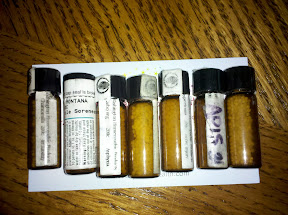
Remedies come in the form of small lactose pellets.  They taste sweet and most children are happy to take them.

Homeopathic remedies are

  • ultra-safe
  • ultra-effective
  • used by millions of smart mothers throughout Europe, India, the United States, and the world

Here’s a picture of my tiny, take-everywhere homeopathy kit. All the remedies I carry fit on a business card.

Using Homeopathic First Aid Remedies

Getting Started Guide

Where do I buy homeopathic remedies?

Homeopathic remedies may be purchased at most health food stores or through websites such as 1-800homeopathy.  At the website, enter the remedy name in the search box and select the 200c potency.  Note:  200c potency remedies are excellent in first aid situations.  They are not suitable for frequent use.

What is the number after the remedy name?

The number after the remedy name is the potency.  The higher the number, the more dilute and potent the remedy.

How do I use homeopathic remedies?

Open the remedy vial.  Shake 3-4 pellets into the cap from the vial.  Tip the pellets into the mouth without touching the cap to the mouth.  Allow the pellets to dissolve in the mouth.  Giving the remedy very soon after the injury or onset of illness leads to rapid healing.

Improvement of symptoms should be evident within 10 minutes.  If no results, repeat the remedy.  If the remedy helps for a while then the pain or condition returns, give another dose of the remedy.  If there is no relief after three doses, try a different remedy if it is indicated.  If the injury is serious and not responding to remedies, seek medical attention.

Which remedies should I buy?

The remedies below are those that I almost always have with me.  I carry them in a small pouch in my purse or pocket and have had many occasions to use them.  A few success stories follow the list.

Remedy Indication
Aconite
  • Shock
  • First signs of illness or flu (for this purpose, a 200c potency is needed)
Arnica
  • Head Injuries (Head injuries are a very serious condition.  Seek medical help immediately. If your child suffers a blow to the head, even if he or she feels fine immediately afterward, stay alert for signs of discomfort and consider being evaluated by a physician if they feel anything out of the ordinary.  Even a mild headache that comes on after experiencing blunt force to the head should be evaluated by a doctor.)
  • Cuts and Scrapes
  • Bumps and Bruises
Apis
  • Bites and Stings, including bees and jellyfish
Arsenicum Album
  • Vomiting and Diarrhea from Food Poisoning
Belladonna
  • Sunburn
  • Sunstroke (This is a very serious condition.  Give remedies on the way to the emergency room.)
Hypericum
  • Injuries to Fingers, Toes and Nerve-Ending Rich Areas
Ledum
  • Puncture Wounds

Real Stories:  Homeopathy Saves the Day

  1. My daughter, then 2, was jumping on the bed.  I was right there watching her and we were having great fun when she somehow slipped from the bed and hit her head on the edge of a dresser.  Immediately, a swelling the size of an egg appeared at the back of her head.  She was screaming.  I was terrified.  I was certain that I would need to go to the emergency room.  I was very new to homeopathy when this happened but I did suddenly remember arnica for bumps and bruises.  I gave her a dose of arnica.  She started to calm down and the swelling began to shrink before my eyes.  I did not entirely believe my eyes so I kept feeling the bump which did seem to be getting smaller.  15 minutes later, I gave her another dose of arnica.  By this time, she was fine and wanted to keep playing.  I was still panicking.  I called my homeopath and told him what had happened and what I was doing.  He calmly listed the signs of concussion and instructed me to watch for those and to proceed to ER if these should appear.  He told me to keep giving arnica every 30 minutes for two more doses then every hour for 2 doses and to call him if I had more concerns.  Within an hour of giving the first dose of arnica, the swelling was almost gone.  When I really felt for it, I could detect it, but my daughter was acting normally and seemed entirely unaffected by the incident or its dramatic aftermath.
  2. We were on family vacation and walking on the beach in the evening.  My husband injured his toe.  He was in great pain and said it had bent all the way back.  I pulled out my pocket homeopathy kit and gave him a dose of arnica.  Five minutes later, he was still sitting down and holding his very sore foot.  He thought that the toe was broken and that we should go to an urgent care facility.  The arnica wasn’t helping!  We were in a strange city with two small children.  By this time, I’d seen a number of arnica miracles and could not believe that he didn’t get instant relief.  Then I remembered that the remedy for injured fingers and toes is hypericum.  I gave him one dose and within a few minutes he was flexing his toes.  I gave him another dose five minutes later.  At this point, the toes felt only slightly sore and we resumed our walk.
  3. My children were playing outside on a beautiful summer day.  Suddenly, my son started screaming and grasping his eye.  No one seemed to know what had happened and we couldn’t tell what he was saying between screams.  I gave him a dose of aconite for shock.  He calmed down slightly but continued to scream.  Now, we could tell what he was saying:  “Bee bited my eye.”  I quickly gave him a dose of apis, the remedy for bites and stings.  He stopped screaming and moved his hand.  I could see the rosy red swelling around his eye (another sign that apis is needed).  The redness and swelling started to diminish and he went back to playing.  Another day saved.
Leave a comment »

Tapping Script for Choosing Joy

I just went through and did this using your script. What an amazing experience! I’ve looked into EFT for a few years now, but never really took the time to DO it. I was always so intimidated. You helped change that. Thank you.–Laura

My journey from shock and overwhelm (after hearing “We think she’s autistic.”) to acceptance and joy has been supported by energy-shifting tools such as homeopathy, meridian tapping, Matrix Reimprinting, and reading. This post is a how-to for one of my favorite techniques.

The “Choices Method” is an EFT technique developed by Patricia Carrington, Ph.D. It is one of my favorite meridian tapping techniques because I find the wording “I choose” so empowering.

Try out this tapping script.  Adjust the words so that they accurately reflect how you feel.  (See the Super-Easy Tapping Guide for a quick how-to.)

Begin by considering the statement “I have this difficult life.”  On a scale of 1 to 10, rate how true this statement is for you.

Tap on the Karate Chop Point while saying:

  • Even though I’ve been on this path of suffering for so many years, I choose to forgive myself.
  • Even though I’ve been giving up everything for so long, I choose to love myself.
  • Even though I have this difficult life, I choose to experience joy every day.

Now tap through the points. (If you need directions, see the Super-Easy Tapping Guide.)

TH: This path of suffering.
IE: I give everything for my children.
OE: I have a difficult life.
UE: This path of suffering.
UN: I give everything for my children.
CH: I have a difficult life.
K27: This path of suffering.
UA: I give everything for my children.
TF: I have a difficult life.
IF: This path of suffering.
MF: I give everything for my children.
RF: I have a difficult life.
LF: I have a difficult life.

Tap again on the Karate Chop point saying:

  • Even though I’ve been on this path of suffering for so many years, I choose to forgive myself.
  • Even though I’ve been giving up everything for so long, I choose to love myself.
  • Even though I have this difficult life, I choose to experience joy every day.
TH: This path of suffering.
IE: I choose to forgive myself.
OE: I’ve been giving up everything for so long.
UE: I choose to love myself.
UN: I have this difficult life.
CH: I choose to experience joy every day.
CB: This path of suffering.
UA: I choose to forgive myself.
TF: I’ve been giving up everything for so long.
IF: I choose to love myself.
MF: I have this difficult life.
RF: I choose to experience joy every day.
LF: I choose to experience joy every day.

Tap again on the Karate Chop point saying:

  • Even though I’ve been on this path of suffering for so many years, I choose to forgive myself.
  • Even though I’ve been giving up everything for so long, I choose to love myself.
  • Even though I have this difficult life, I choose to experience joy every day.
TH: I choose to forgive myself.
IE: I choose to love myself.
OE: I choose to experience joy every day.
UE: I choose to forgive myself.
UN: I choose to love myself.
CH: I choose to experience joy every day.
K27: I choose to forgive myself.
UA: I choose to love myself.
TF: I choose to experience joy every day.
IF: I choose to forgive myself.
MF: I choose to love myself.
RF: I choose to experience joy every day.
LF: I choose to experience joy every day.

Reconsider the statement “I have this difficult life.”  On a scale of 1 to 10, rate how true this statement is for you now?

Notice any changes in your feelings.  Note any feelings in your body.  Consider tapping on any memories or sensations that come up.  If you need support or direction for optimizing your tapping time, considering working with an energy psychology professional.

Prepare to be Amazed as Your Life Gets Easier with Each Session

Did you try the tapping?  Did you notice anything?  I’d love to hear about your experience in the comment section below.
If nothing happened, please see

The Difference Between Mundane and Miraculous EFT: One Session with a Pro can Change Your Life

and read how I went from EFT skeptic to convert.

Leave a comment »

Emotikin World

Playing With My Inner Artist

3 Moons

Art and design for all Phases of LUNAsea

NEWSSPELL

The Only Real Alternative News Source

BlogENG - Witia

Discovering Ourselves through Parenting

DNA Activation The Unveiling

Underground Bases, Celebrity Cloning, Breakaway Civilizations, Zero-Point Field Technology, Soul/Consciousness Transfer, Immortality, Trauma-Based Mind-Control, Genetic Engineering, DNA Activation, Time Travel, Psychology and Consciousness, The Unveiling

TarotPugs

Tarot, Spirituality & Pugs

Captain's Blog

News for the Collective Cosmic Journey

WordPress.com News

The latest news on WordPress.com and the WordPress community.

Spiritual Nutrition: Clean and Pristine

Real Food, Real People, Real Living...

Nature's Magical Photography By Jaxs

Connecting with earth and the universe through photography

Rose Rambles...

What in the World is on Cynthia's mind? Love, Spirituality, Free Energy, Abundance, Quantum Awareness

Rebecca Wood

Discovering Ourselves through Parenting

L. D. Lewis

SFF Writer and Worldbuilder

The Lonely Author

Pain goes in, love comes out.

But I Smile Anyway...

Musings and memories, words and wisdom... of a working family woman

sibo-with-hope

A blog dedicated to maintaining hope while healing from SIBO

Tighten Your Query

Fewer words. Greater impact.